Regenerative Practices Have Yielded Unruh Walnut Farms Big Dividends in Chemical Savings
A grower profile article from National Nut Grower magazine (November/December 2024 issue) covering Daniel Unruh’s regenerative transition at his 193-acre walnut orchard in Colusa County. Focuses on how his mustard cover crop strategy resolved a severe nematode problem without chemicals, the evolution toward diverse 30-species cover crop mixes, no-till and crimping practices, biological pest management, […]
Interview with Molly Taylor on Cover Crops
A blog interview with PT Ranch manager Molly Taylor covering the ranch’s adoption of cover crops starting in 2020, including the specific species used (turnips, clovers, collard greens, oats, rye), their no-till approach, integration with cattle grazing, benefits to soil health and drought resilience, and how California’s Healthy Soils Incentive Program and carbon credit markets […]
5 with a Farmer: Molly Taylor of PT Ranch
A short-form video in Kiss the Ground’s “5 with a Farmer” series, featuring five rapid-fire questions with PT Ranch manager Molly Taylor about regenerative farming, her philosophy on soil health, and what she hopes future generations understand about working with nature rather than against it.
From Pilots to Big Bold Visions: Rapid Scaling of Carbon Farming in Santa Barbara County
A panel presentation slide deck from August 2017 prepared for the Central Coast Climate Collaborative, featuring Russell Chamberlin (Ted Chamberlin Ranch), Anna Olsen (Cachuma Resource Conservation District), Emily Miller (Community Environmental Council), Sharyn Main (Santa Barbara Foundation), and Aeron Arlin Genet (Santa Barbara County APCD). The presentation covers the science of carbon farming, results from […]
Ted Chamberlin Ranch: Regenerative Rangeland Management and Carbon Farming in the Santa Ynez Valley
A Kiss the Ground farmer feature profiling Russell Chamberlin and the Ted Chamberlin Ranch, describing the family’s transition to planned/holistic grazing and compost application through California’s Healthy Soils Program, the resulting improvements in rangeland health, biodiversity, soil water-holding capacity, and carbon sequestration, and the ranch’s participation in NRCS programs (CSP and EQIP) and educational workshops […]
Paul Muller of Full Belly Farm: No-Till and Cover Crop Experiments in Regenerative Agriculture
A profile of Paul Muller, co-owner of Full Belly Farm in the Capay Valley, describing his NRCS Conservation Innovation Grant–funded experiments with no-till management, cover crop mixes, and roller-crimping techniques aimed at improving soil health and carbon sequestration.
MacRostie- Thale’s Vineyard
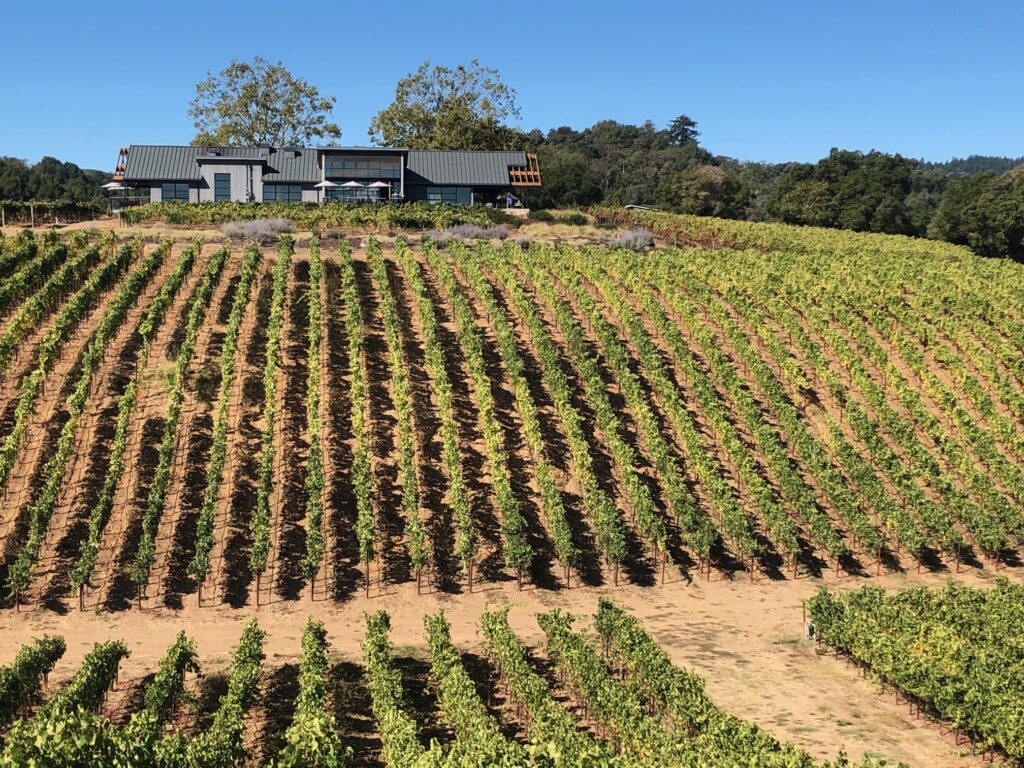
MacRostie is committed to using sustainable management practices on all their ranches, including at Thale’s Vineyard near Healdsburg. MacRostie has been implementing sustainable practices for several years, to best care for their land and resources, and to produce high quality grapes for their wine. MacRostie is certified sustainable by the California Sustainable Winegrowers Alliance. They […]
Saralee’s Vineyard
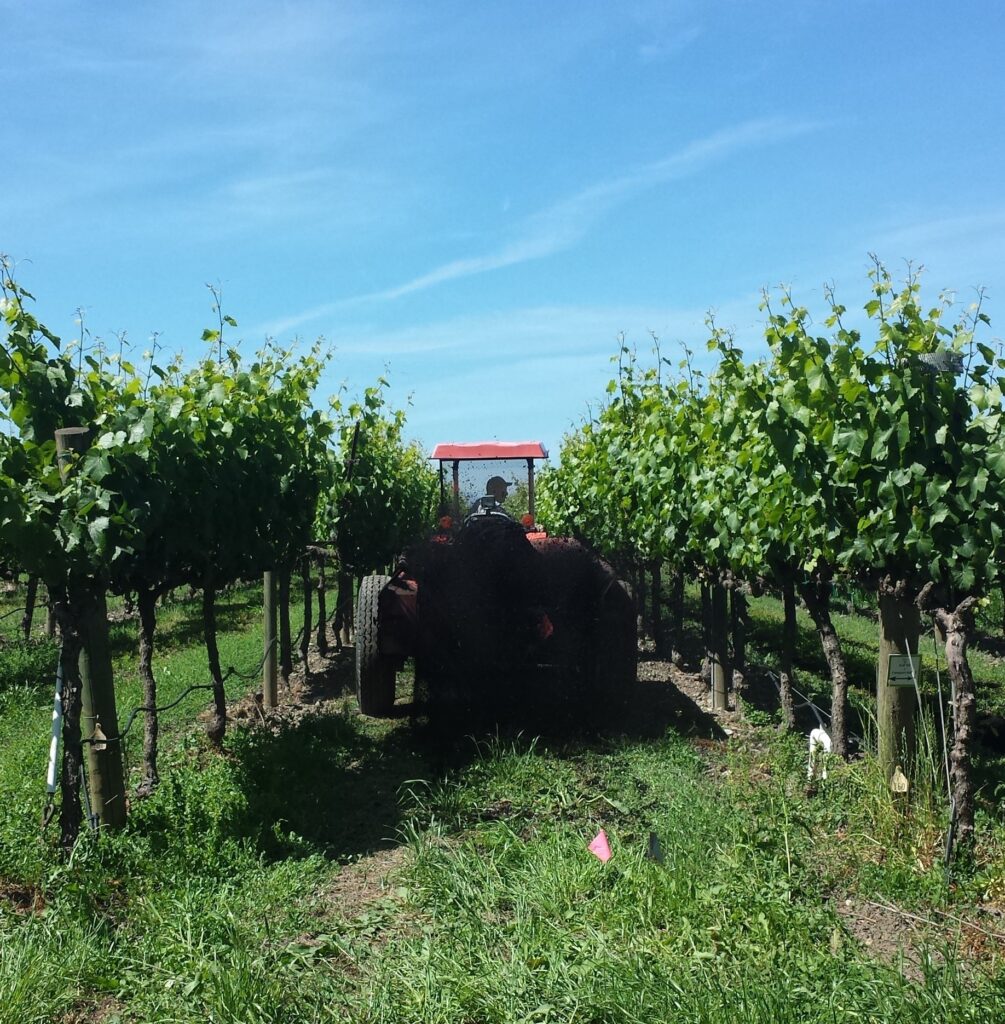
Saralee’s Vineyard launched a compost and tillage field trial in 2018, initially funded for three years through a grant from the Healthy Soils Program, coordinated by the California Department of Food and Agriculture. After the grant period ended, Jackson Family Wines committed to continuing the trial to monitor long-term changes in soil health, working in […]
Full Belly Farm
Full Belly Farm is a certified organic farm located in the beautiful Capay Valley of northern California. We are committed to fostering sustainability on all levels, from fertility in our soil and care for the environment, to stable employment for our farm workers. We strive to be good stewards of this farm, so that this […]
Hummingbird Agrotek, LLC / The Agave Farm
We responsibly practice sustainable agriculture by implementing agroecological practices such as, maximizing crop diversification, organic fertilization, water and invertebrate conservation. We enhance carbon uptake by minimizing soil disturbance, maximizing biodiversity in the soil, cover cropping or mulching, applying compost yearly, and practicing agroforestry in our agave plantations. We are passionate about conserving and propagating our […]